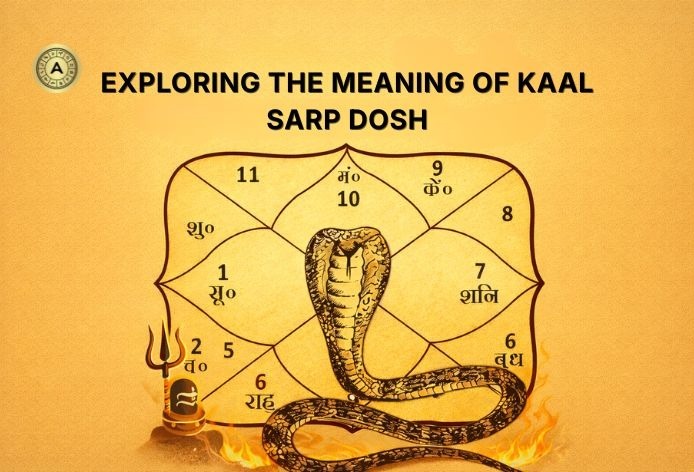

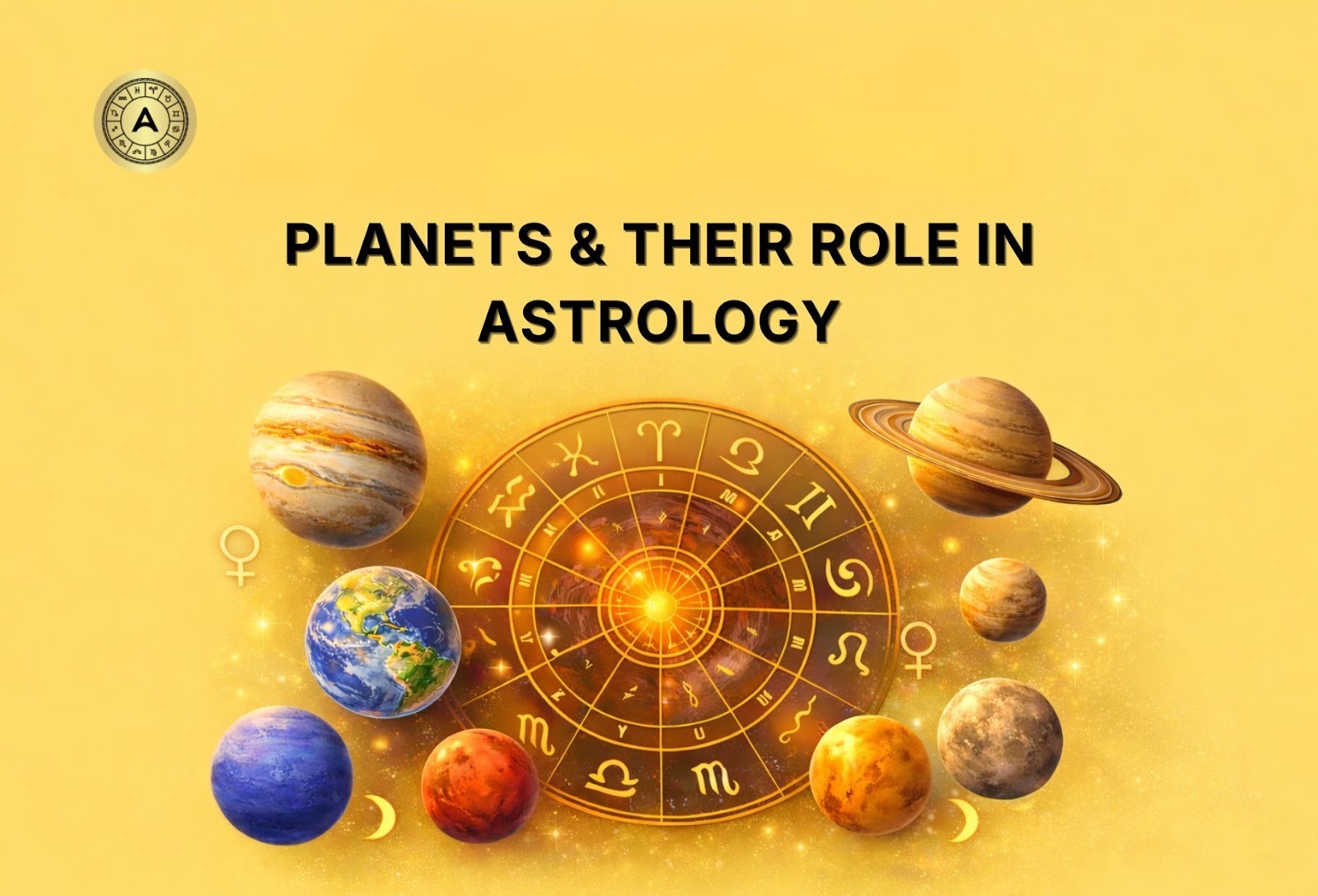
In Indian families, the guidance of the planets for centuries has been used to decide when to get married, what profession to follow or the ups and downs of life. According to astrology, each of the planets possesses a certain energy that influences the life of individuals in its own manner. This guide will explain the role of planets in astrology predictions and how those celestial bodies can shape thoughts, actions and events in our lives. Imagine the planets as they belong to one big family; some of them are powerful and emotional, others are calm and guiding. Once you understand their character, reading your kundli (birth chart) becomes easier and meaningful.
Understanding the Cosmic Cast: The Nine Grahas
Vedic astrology involves nine grahas (planets). There are seven physical planets and 2 shadow points, Rahu and Ketu. According to the ancient scholars, the grahas have some types of energies and the energies affect our thinking, behavior and mode of life.
For example, Sun is the symbol of power and the role of a leader. Moon is the symbol of emotions and intuition. Jupiter is the symbol of intelligence and growth. Rahu and Ketu are not physical forms, but they reflect on our wants and spiritual teachings. So on & so forth. Planets in astrology do not determine what will happen; they are merely descriptions of what could happen and the challenges that you can manage.
Personal, Social and Collective Planets
To simplify the effects, astrologers have grouped the grahas into three groups:
Personal planets: The personal planets consist of the Sun, Moon, Mars, Mercury and Venus. They are considered high-moving and reflect your daily character. They define what you are, what you feel, what motivates you, what type of relations you build and how you think.
Social planets: The social planets are slower and they include Jupiter and Saturn. They determine the extent of your growth, learning and also socialization. Jupiter is blessing, hope and development, whereas Saturn is discipline and duty.
Collective planets: Rahu and Ketu are the shadow nodes and not physical bodies. They relate to the karmic teachings, where Rahu is the force of ambition and materialistic desires and Ketu is the force of detachment and spiritual freedom.
This easy categorization allows a beginner to be familiar with how every planet in Kundali may work in your life.
Meeting the Navagrahas: Energy and Everyday Life
Sun (Surya): Your Inner Light
What it represents: The Sun is the king of a royal family; it is your inner self, your self-image and your life power. A balanced Sun in your chart is a confidence and leadership one. A weak Sun may be characterized by self-doubt or inability to speak for yourself.
Everyday tips: To reach the energy of the Sun, you should do Surya Namaskar at sunrise, be outside and develop your creative interests. According to the astrology of the Vedas, a ruby makes the Sun stronger and Sundays are the most suitable days to set the goals.
Moon (Chandra): The Mind and Emotions
What it represents: The Moon controls your moods, instincts and subconscious. It has an impact on your behavior with other individuals and your reaction to the emotion. The strong Moon is associated with understanding and adaptable traits and the weak moon causes mood swings.
Everyday tips: Have a journal to remind you how you feel, become mindful or meditate and wear pearls with positive beliefs. Mondays are to spend time with the family and take care of oneself.
Mars (Mangala): Courage and Energy
What it represents: The role of Mars as a planet in astrology is seen as a warrior. It fuels your ambition, body energy and motivation. A moderate Mars is brave and energetic; an excited Mars may be impatient or aggressive.
Everyday tips: Channel your Mars energy by use of exercise, sports or dance. Eat red or add spices such as ginger in your food in order to create positive fire. Mars is traditionally linked to Tuesdays.
Mercury (Budha): Intellect and Communication
What it represents: Mercury dictates communication, learning and adaptability. It controls your thinking capacity and information processing. A good Mercury makes you enjoy learning and talking clearly and a poor Mercury makes you feel like your head is in so many pieces or that people do not understand you.
Everyday tips: Read as much as you can, speak or write something and do some puzzles or brain games. The color for Mercury is green and Wednesdays are believed to favor business and study.
Jupiter (Guru): Wisdom and Growth
What it represents: Jupiter is the generous guru. It comes with wisdom, philosophy and growth. A well-placed Jupiter brings opportunities and hopefulness and religious understanding; when Jupiter is poorly positioned, it may bring excess and illusions.
Everyday tips: To be in line with Jupiter, you should try to learn, mentor or perform charity. Rituals (such as reading holy books and having prayers on Thursdays) in the yellow or gold color are believed to calm this planet.
Venus (Shukra): Love and Harmony
What it represents: Venus is a symbol of beauty, relations and art. In planets in Vedic astrology, Venus shows how you love, how you enjoy life and how you handle money and pleasures. Favorable Venus gives charm and harmonious cooperation; unfavorable Venus might bring jealousy.
Everyday tips: Engage in art, music or dance; practice gratitude in relationships; and spend time in nature. Fridays could help to increase vibrations of Venus; wearing white or pastel can improve them.
Saturn (Shani): Discipline and Lessons
What it represents: Saturn is referred to as the taskmaster. It controls accountability, discipline and long-term rewards. A Saturn in the right place will create patience and tenacity; a rough Saturn can come in the form of delays or misfortunes.
Everyday tips: Be committed to keeping routines, work hard and practice humility. Black or navy colors and rituals on Saturdays (such as giving assistance to the older ones) are in tune with the energy of Saturn.
Rahu: Ambition and Innovation
What it represents: Rahu is a dark aspect that is associated with lust, wants and non-traditional ways. It drives you on material intentions and experiences. Being balanced, Rahu generates ambition and innovation; being unbalanced, it may result in obsession or illusion.
Everyday tips: Take the energy that Rahu has and create something or learn something new. Master mindfulness in order to make careless choices. Rahu is usually calmed by black sesame seeds, which are sometimes given during rituals.
Ketu: Detachment and Spiritual Insight
What it represents: Ketu, which is the south lunar node, is spiritual detachment, intuition and karmic teachings. It assists you to lose material possessions and seek a deeper meaning. A powerful Ketu makes you more spiritual; a challenged Ketu can make you confused or detached.
Everyday tips: Meditate, get some time alone in nature and volunteer. The power of Ketu can be in harmony with wearing simple clothes and putting spiritual activities into consideration.
How Planets in Your Birth Chart (Kundali) Affect Life
The planets in kundali do not simply work individually. They are seated in twelve houses and each one of them signifies an aspect of life like self, family, communication, home, creativity, health, partnerships and career. The 9 planets in these houses decide which regions will be more energetic and which ones might require more work. One example is that when Mars is positioned in your seventh house, then you can enjoy a passionate and lively relationship; however, you will have to contend with impulsivity. The fourth house is a Moon sign, which means the attachment to the house and family can be described as extreme.
The other factor of astrology is the aspect and conjunctions, the way the planets seem to look to each other on the chart. The planets in harmonious angles will create (or balance) their energies and the difficult angles may result in tension.
Transits and Periods of the Planets (Dasha)
Vedic astrology has cycles according to which life is lived, which are called dashas. Every dasha is governed by a certain planet and has an impact on the patterns in your life at that time. As an example, a Venus dasha can offer love and artistic activities, whereas a Saturn dasha might introduce some duties and significant teachings. During different dashas and transits, planets move through the zodiac and switch on specific areas of your chart. When Jupiter goes through a good house, you have opportunities for growth; when Saturn goes through a difficult house, you have patience as your friend. The knowledge of these cycles will make you act according to the changes of the universe rather than against it.
Harmonising Planetary Energies: Simple Remedies
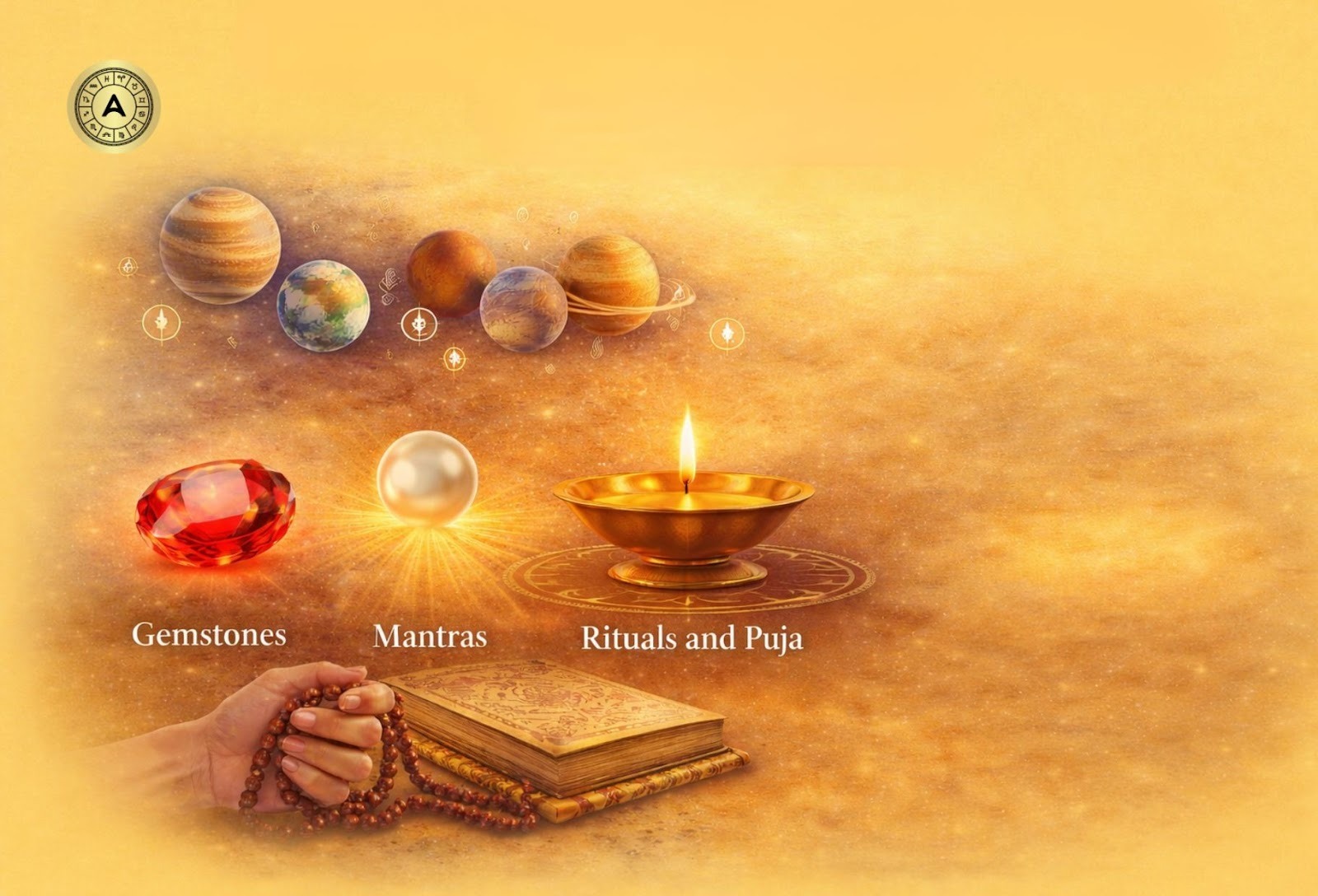
The role of planets in Vedic astrology is not fixed and unchangeable. The ancient sages believed that negative energies could be neutralized and positive energies could be strengthened. Some of the remedies are wearing gemstones, chanting mantras, conducting rituals and doing good deeds. The following are simple things that beginners can do:
Gemstones: Each planet is associated with a gemstone (for example, ruby with the Sun and pearl with the Moon). You should consult an expert astrologer before wearing gemstones.
Mantras: Chanting certain mantras helps to synchronize your mind with the energies of the planets. The Gayatri mantra is a tribute to the Sun and “Om Som Somaya Namaha” soothes the Moon.
Rituals and puja: Simple rituals like lighting a lamp on Saturdays for Saturn and performing a ritual of pouring water to the Sun every morning help to inculcate awareness and gratitude.
Acts of kindness:Performing good actions to people that are related to a certain planet (like old people to Saturn and schools for Jupiter) can create a better balance of the energies and positive karma.
Conclusion
Planets, as used in astrology, do not concern themselves with a prediction or guarantee of success. It, in fact, is a guide to potential energies and timelines. It is a plus to know your planets, be it the passionate blood of Mars, the caring light of the Moon or the moving power of Rahu, to make an informed choice. Astro247 is a tool that assists in the modern interpretation of the ancient knowledge, assisting you in understanding life in a clear and confident way. Always keep in mind that astrology is not a replacement for your own judgment and free will; it is a substitute to it.
Frequently Asked Questions
About the Author
Jyotish Rahul
10+ years ExperienceJyotish Rahul has been a Vedic astrologer for more than 10 years. He is known for his calm guidance and specializes in kundali analysis and planetary influences, helping people make confident life decisions. With a warm counselling style, he helps clients understand their charts and navigate life's important decisions.