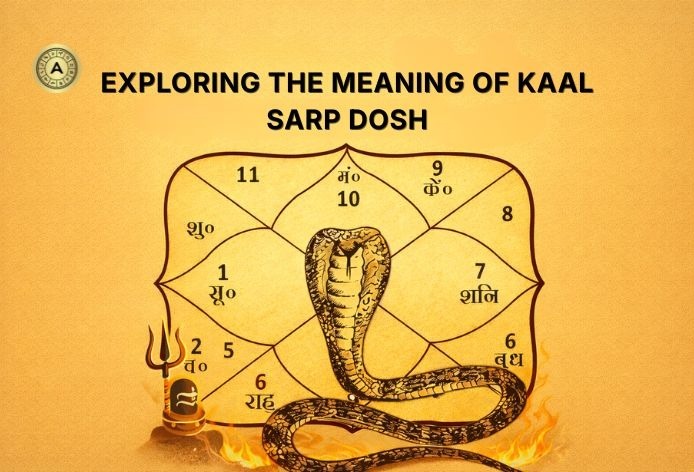


A Janam Kundali is also known as a birth chart, which indicates the position of all the planets at the point of your birth. It is mainly broken down into twelve houses that reflect various aspects of your life, like personality, relationships, work, health and more. The position of all your planets within these twelve houses creates your kundali.
If you are new to Vedic astrology, then reading a janam kundli can feel complex to you. It can become very confusing to understand where to start, as there are different symbols, numbers, houses and planets involved in it. In this guide the process has been simplified for you. You will get the ability to interpret your kundali once you will understand your own birth chart and get the knowledge about the various components of it, including how each component interacts with one another.
Why Read Your Kundali?
The kundali reading is a pattern of planets at the time you were born. It reflects your character traits, strengths and weaknesses in life. Understanding it can:
Personal Insights
It can help you in gaining personal knowledge by giving you an idea of your motivations, behaviors and challenges.
Predictive Analysis
Many of the astrologers think that the planet's positions in the Kundali can help in predicting future events and trends in your life. However, one should take these predictions just as guidance rather than final facts.
Remedies and Spiritual Support
According to astrology, you can get suggestions of remedies and spiritual support for major aspects of your life, such as mantras, gemstones or lifestyle changes. The intent of these remedies is to align you with positive energies and help you face the challenges.
Partner Alignment
Kundali alignment is frequently used in India before marriage to check the compatibility between the partners. This can help them in ways to support each other for growth.
Career Guidance
It can give you the idea about your career path and profession that can best suit you according to your personality traits.
Spiritual Growth
More self-knowledge can help in making your spiritual aspect stronger.
Collect Your Birth Details
You need to have your exact birth information before starting your Kundali analysis:
- Date of birth
- Exact time of birth (the accuracy of your analysis depends on this)
- Place of birth
There are lots of astrology websites or software tools that can generate your birth chart by using these details. If you do not know the exact time, then sometimes the astrologers solve it by asking about the main events of your life.
Step 1 – Identify Your Ascendant Sign (Lagna)
The ascendant sign is also known as Kundali lagna. It is the zodiac sign that rises on the eastern horizon when you are born. It shows up in the very first house of your birth chart. According to astrologers, finding your ascendant sign is the most crucial step, as it represents your body's external personality, confidence and whole identity. That is why the first house is also known as the "house of self." Once you are clear with the first step, many other elements of your chart start to make sense.
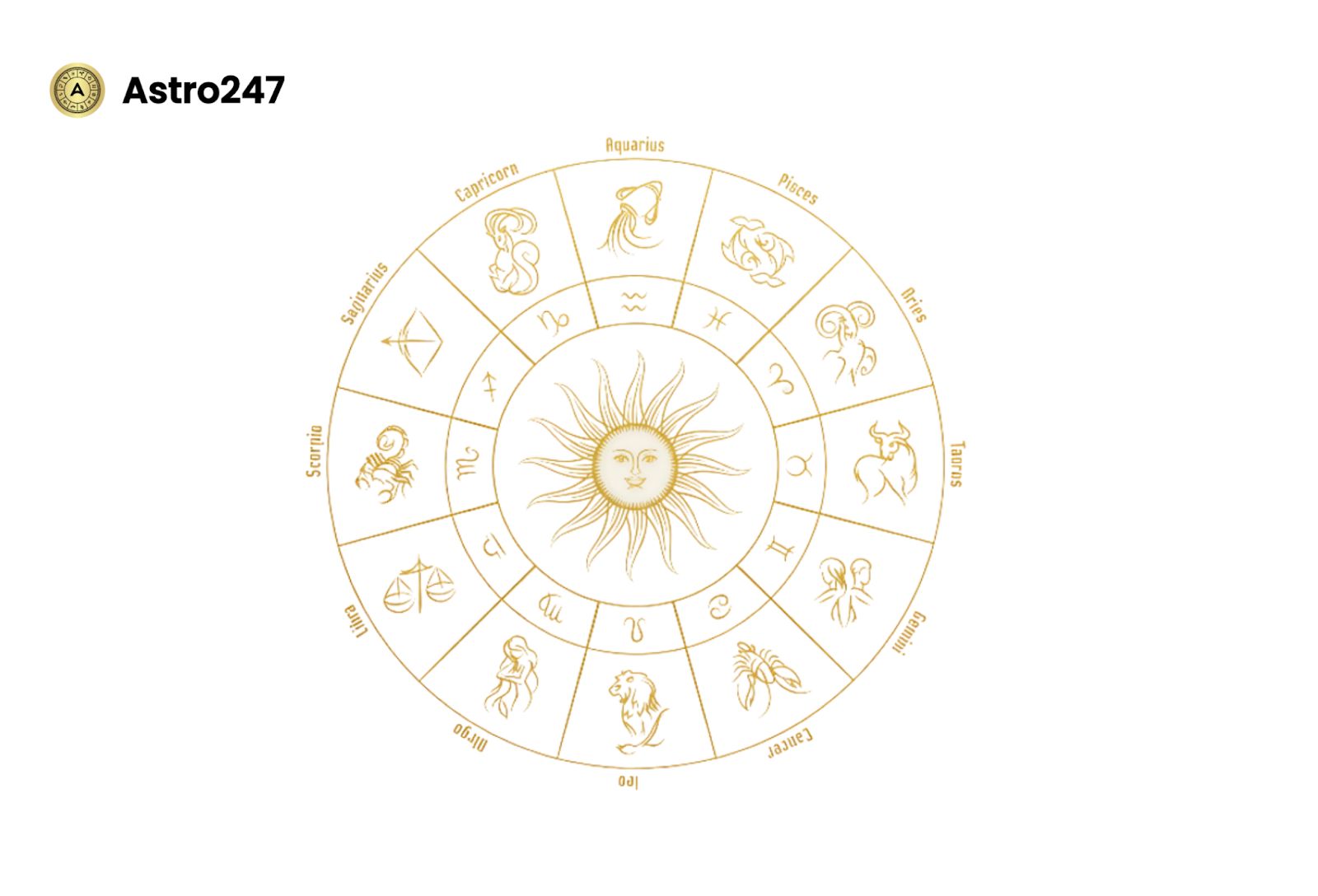
The roman numerals in the charts label houses, whereas, the first house is in the top center or left; the numbers 1‑12 denote zodiac signs. The following numbers represent the signs:
| Number | Sign | Comments |
|---|---|---|
| 1 | Aries | Active, pioneering spirit |
| 2 | Taurus | Stability, material comfort |
| 3 | Gemini | Communication, intellect |
| 4 | Cancer | Emotions, home life |
| 5 | Leo | Leadership, creativity |
| 6 | Virgo | Service, health, analysis |
| 7 | Libra | Balance, partnerships |
| 8 | Scorpio | Transformation, research |
| 9 | Sagittarius | Philosophy, travel |
| 10 | Capricorn | Discipline, ambition |
| 11 | Aquarius | Innovation, community |
| 12 | Pisces | Spirituality, imagination |
Importance of the Ascendant
The ascendant sign in the kundali reflects:
- Self‑representation— Your external personality and how other people see you as a person.
- Life challenges— The challenges you can face according to the position of the planets in your lagna.
- Health insights— Body strengths or difficulties reflected through the first house.
- Compatibility and career path— Has a very important role in relationship matching and career paths aligned with your personality.
Step 2 – Understand the 12 Houses (Bhavas)
They are similar to the rooms in one's cosmic mansion. Each one signifies something different. Astrologers decode this by stating that these Bhavas are classified as follows: Dharma, Artha, Kama, Moksha. These are reminders to ensure that we are traveling towards a balance.
If you want to correctly interpret your birth chart, then it is very important to know the meanings associated with every house.
| House (Roman numeral) | Life area it represents |
|---|---|
| I (First House) | Self, physical appearance, personality, temperament |
| II (Second) | Wealth, finances, family, speech, primary education |
| III (Third) | Communication, siblings, hobbies, courage, efforts |
| IV (Fourth) | Mother, emotional foundation, home, vehicles and property |
| V (Fifth) | Education, romance, creativity, children, past life karmas |
| VI (Sixth) | Work, service, diseases, enemies and debts |
| VII (Seventh) | Marriage, partnerships, spouse, public image |
| VIII (Eighth) | Longevity, transformation, accidents, research, occult |
| IX (Ninth) | Luck, religion, long journeys, father, mentors and beliefs |
| X (Tenth) | Career, public status, profession and karma (actions) |
| XI (Eleventh) | Income, gains, ambitions, elder siblings |
| XII (Twelfth) | Expenditure, losses, foreign travel, liberation |
When you are studying your kundali, do notice which planet lives in which house and how they relate to the themes of that house. For example, if Jupiter is in the ninth house, then it means there is spiritual interest, whereas Mars in the tenth house can represent a strong and energetic career.
House Groups and Their Roles The roles that some of the house groupings can be summed up in this way:
- 1, 4, 7 & 10 – Primary houses of importance (the angular or Kendra houses).
- 2, 5, 8 & 11 – Houses that indicate success and progression.
- 3, 6, 9 & 12 – Cadent houses; these have a supporting role and can bring change or challenges.
- 1, 5 & 9 – Trine houses; they reveal ruling influences and are considered auspicious.
- 3, 6, 10 & 11 – Houses related to material gains.
- 6, 8 & 12 – Known as Trika houses, these represent obstacles or inauspicious aspects but also opportunities for transformation.
- 2 & 7 – Called Maraka houses; they can trigger challenging periods.
- 1–7 – Represent the visible half of the chart, dealing with personal and social life.
- 10 to 4 – Eastern half of the horoscope; indicates outer actions.
- 4 to 10 – Western half; relates to inner life.
Learning about these patterns will help you see which areas of life are prominent and which require extra care or growth.
Step 3 – Study the Planets (Grahas)
In Vedic astrology there are nine planetary bodies and there is a specific role or energy for each of them. Understanding these planetary significances is important for kundali reading. The following table defines the key qualities:
| Planet (abbreviation) | Represents |
|---|---|
| Sun (Su) | Authority, vitality, leadership and masculine energy. The Sun indicates self‑identity and father figures. |
| Moon (Mo) | Inner self, emotions, mind, memory and femininity. It relates to mother, moods and instincts. |
| Mercury (Me) | Communication, intelligence, speech, humor and analytical skills. |
| Mars (Ma) | Courage, physical strength, passion, ambition and siblings. |
| Venus (Ve) | Love, art, beauty, relationships, luxury and material pleasures. |
| Jupiter (Ju) | Spirituality, knowledge, higher learning, wisdom and benevolence. |
| Saturn (Sa) | Discipline, hard work, sorrow, resilience, property, delays and challenges. |
| Rahu (Ra) | Foreigners, risk‑taking, hidden issues, over‑ambition, gambling and unconventional thinking. |
| Ketu (Ke) | Spirituality, technology, superstitions, ancestors and detachment. |
Planetary Strength: Exaltation and Debilitation
The zodiac influence on a planet determines how much power it has. A planet in an exalted sign will have many more excellent characteristics than one in a debilitative sign, where the planet may have fewer effects or challenging effects upon someone's life. The following chart illustrates the planet's connections with each of their exalts and debils so that one may understand clearly.
| Planet | Ruling signs | Exalted sign | Debilitated sign |
|---|---|---|---|
| Sun | Leo | Aries | Libra |
| Moon | Cancer | Taurus | Scorpio |
| Venus | Libra, Taurus | Pisces | Virgo |
| Mars | Aries, Scorpio | Capricorn | Cancer |
| Saturn | Capricorn, Aquarius | Libra | Aries |
| Jupiter | Sagittarius, Pisces | Cancer | Capricorn |
| Mercury | Virgo, Gemini | Virgo | Pisces |
| Rahu/Ketu | – | – | – |
You can determine if a planet is exalted or debilitated through janam kundali or also know if the planet rules over the zodiac sign it is placed in. An example of an exalted planet would be the Sun in Aries because the Sun is very powerful. If the Sun is placed in the zodiac sign of Libra, it will show power because the power of the Sun must be balanced by the power of the human consciousness. If there are two planets that are near each other, the power of the two planets can be equivalent to harmony or can be contradictory to each other. If Saturn, Venus and Aries are close, there will be a contradiction between the discipline of Saturn and the love of comfort of Venus and the independence of Aries.
Step 4 – Analyse Planetary Relationships, Aspects and Yogas
In Vedic astrology planetary aspects are defined differently than just looking at the sign they are in as well. Planetary aspects are the ways that planets can interact with other planets or their positions relative to one another. If a planet is beneficent (like Jupiter), then that planet's aspect is likely to create a positive influence on you and relieve difficulties that other planets create; however, if a planet is maleficent, that planet's aspect (like Mars or Saturn) may produce an obstacle. See:
Conjunctions
It happens when two or more planets sit in the same house. Their vibrations sometimes blend peacefully and sometimes with little tension. If a gentle planet like Venus sits next to a fiery planet like Mars, it can create an inner push-and-pull.
Oppositions
When planets are positioned opposite each other, then it can create tension but also a need for balance.
Trines
Planets that are positioned 120° apart usually bring harmony and opportunities.
Yogas and Doshas
Yogic combinations or Yogas are certain planetary alignments that can produce good or bad results. Positive yogas are very good to achieve goals, wealth or intelligence, whereas negative yogas can create obstacles or challenges. Identifying yogas and doshas adds a deeper level to Kundali analysis. It helps in highlighting both positive strengths and possible challenges within a chart.
If you find a yoga in your Kundali, know what it is and discuss it with an astrologer. A yoga's effectiveness is dependent upon the strength of the planets involved. If a planet is weak, it may not allow the yoga to provide its full potential benefits.
Step 5 – Consider Planetary Periods (Dashas) and Transits
Vedic astrology uses Dashas as planetary periods that indicate which of the planet's influences is the strongest in your life currently. A cycle of 120 years is further split among the nine planets, as mentioned under Vishottari Dasha. The dasha of different planets can indicate growth or challenges or important life events for an individual. Various astrologers have suggested that one should focus intently upon Dashas and transit, as they indicate areas in life in which an individual finds life flowing with ease or where an individual faces some kind of resistance. An individual's Mercury dasha may indicate communication, education or foreign travels and Saturn dasha may indicate tough work or some kind of delay.
Transits The current movement of planets in the sky is referred to as transits. Whenever a transiting planet intersects a natal planet's position at a certain time, that transiting planet will often create a time to seize that opportunity (or event) or can change the way that person feels about their life. Tracking transits while going through your birth chart can help an individual better pinpoint their best time to act but should be viewed as part of a broader view of the individual's birth chart and is placed within the context of their Dashas.
Step 6 – Look for Remedial Measures
There are several remedies that Vedic astrology offers to reduce challenging planetary influences and strengthen beneficial ones. Common solutions are:
Mantra chanting
Chanting certain mantras on certain planets, for instance, the Gayatri Mantra on the sun and the Maha Mrityunjaya Mantra on Saturn, it is believed to tune one's waves to the high vibrations of the respective planet or planets.
Gemstones
The gemstones corresponding to the planets, starting from ruby for the Sun, pearl for the Moon, emerald for Mercury. It is always best to consult a good astrologer who can procure us the gemstones that are properly mined.
Fasting and donations
Maintaining the fasting days on the suggested days of the week, for example, fasting on Mondays for the Moon and giving donations on the days of the planets.
Rituals and pujas
Performing Vedic rituals such as "Navagraha Puja" in reverence for the planets. The guidelines are to be sought from an experienced "Pandit / Astrologer."
These practices are optional and of symbolic meaning. Most astrologers agree that the best way to handle or protect oneself from the energies of planets is to work upon yourself as a person and conduct yourself in a moral manner.
Key Considerations for Interpretation
Don't depend on general predictions
Everyone's chart is different and each planet communicates differently in various signs and houses. Look at the entire chart.
Balanced view of yogas and doshas
While positive yogas can offer blessings, negative doshas are not a definite fate. There are various factors, such as planetary strength and transits, that will affect their outcome.
Go for professional help
There are possibilities you can overlook hidden challenges while reading your own kundali. Thus, it is always a good practice to opt for an experienced astrologer, as they can pick up patterns and points which are normally overlooked.
Let Your Kundali Guide You, Not Define You
The purpose of analyzing the Kundali is for you to use the knowledge in making judgments on the path you need to take in terms of development. It does not affect free will; you still have the power to choose, grow and make positive changes in your life.
Practical Tips for Beginners
Start with your Lagna chart
Many online tools offer a Lagna chart (ascendant chart) that focuses on the first house. Learning how to read a lagna chart helps you understand your core identity and physical nature.
Use credible sources
Read books by renowned astrologers (e.g., B.V. Raman, Dr. B.V. Sundaram) and rely on trusted websites. Avoid sensational predictions.
Keep a journal
Record planetary transits, Dashas and your experiences. Noting how events correlate with your chart helps you learn patterns over time.
Stay humble and open‑minded
Astrology is a vast field. Approach it as a lifelong study and avoid making rigid conclusions.
Focus on personal growth
The ultimate goal of Kundali analysis is self‑awareness and growth. Use insights to cultivate resilience, compassion and wisdom.
Learn with Confidence on Astro247
Once you will get the understanding of a janam kundali, you might feel that certain combinations and planetary periods are things that have to be interpreted in a deeper way. Whereas self-study brings awareness, professional guidance connects the dots in such a way that everything will become crystal clear. At Astro247, Kundali reading is done with an emphasis on precision, moderation and practical insight into Vedic astrology. Whether you are interested in confirmation about your understanding and interpretation or are seeking to have a more complex planetary influence analyzed, the expert AI-powered astrology system at Astro247 will do this thoughtfully. Get personalized guidance and bridge basic chart reading into meaningful insight that fits into your personal life's journey.

Conclusion
Kundali reading is a very powerful tool for self-discovery. We have to keep in mind that astrology is a helpful guide, not a predefined script. By integrating your kundali knowledge with practical wisdom and self‑reflection, you can use it to navigate life's challenges, make informed decisions and foster personal growth.
Begin your journey into kundali reading with curiosity, patience and respect for this ancient wisdom. Whether as a fun thing or searching deeper for meaning in life, the knowledge you will stumble upon will shed light on your strengths, challenges and potential. If you are one of those individuals who like to be guided through the learning process, then you can explore your birth chart via the Astro247 app, to make the journey of your life more enriching and conscious.
Frequently Asked Questions
About the Author
Jyotish Om Prakash
15 years ExperienceWith 15 years of practical experience, Jyotish Om Prakash is deeply rooted in traditional astrology. His expertise lies in nakshatra matching, horoscope interpretation, and life guidance. He offers thoughtful insights that balance ancient wisdom with practical understanding.