
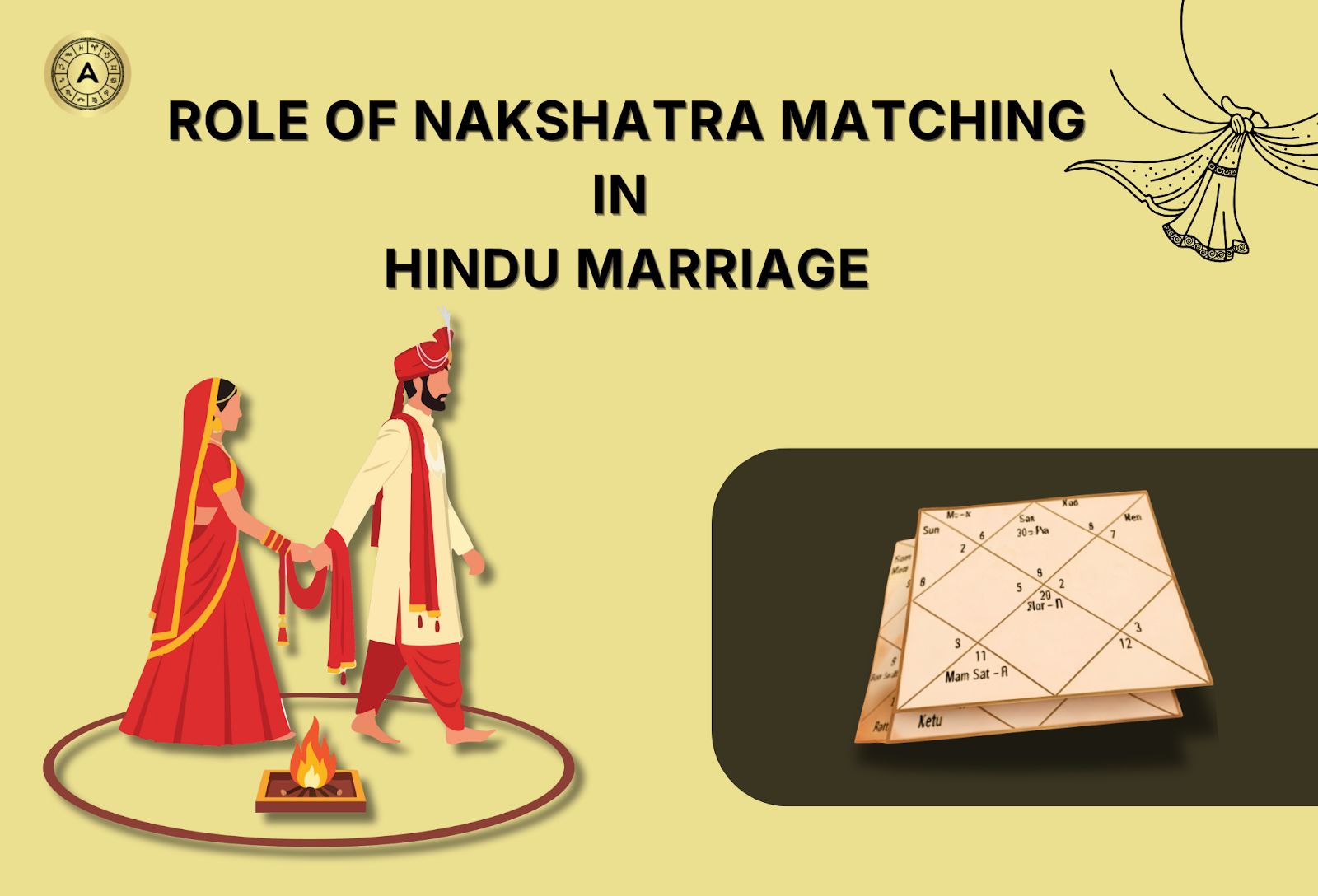
Have you ever wondered how older people still count the stars before anybody gets married? In Hindu marriages, the selection of a life partner is not only about love or about what the families believe; it is about matching the cosmic energies since the time you were born. It is what they refer to as star matching or nakshatra matching and people have been relying on this for a very long time.
There are some people who consider it a superstition, yet in an actual sense, this is the other way of finding out whether two people will be compatible or not. When you are getting married, you are not engaging only yourself with romance, but you are combining personalities, characters, strengths and weaknesses. It is more or less like gardening; one sees the soil and the weather before planting something. The same is done by astronomers but with moons and stars so as to determine whether a couple would work or not. In this article, we will explain in detail what star matching is, why it is important in Hindu marriages and how it is performed in various regions of India.
Understanding Nakshatras—The Lunar Mansions
There are 27 lunar constellations that are referred to as nakshatras by Vedic astrology. The nakshatra covers 13.20 degrees of the sky and it is further separated into four quarters or pada. Such assemblies of stars are divisions of the heavens and in each of them there must be a lord, deity, symbol and character. Talking of star matching in marriages, we are actually talking of the nakshatras of the bride and the groom, especially where the Moon was when they were born. The Moon is the master of intelligence and emotions; that is why its formation reflects the character of a person, his/her desires and instincts. To cite an example, couples with complementary nakshatras are said to respect and trust one another; they have more intimacy and devotion to each other. They have the notion that their mental and emotional vibrations are in sync with each other and it is easier to go through good and bad times of life as a couple.
How Nakshatra Matching Works: Different Systems Across India
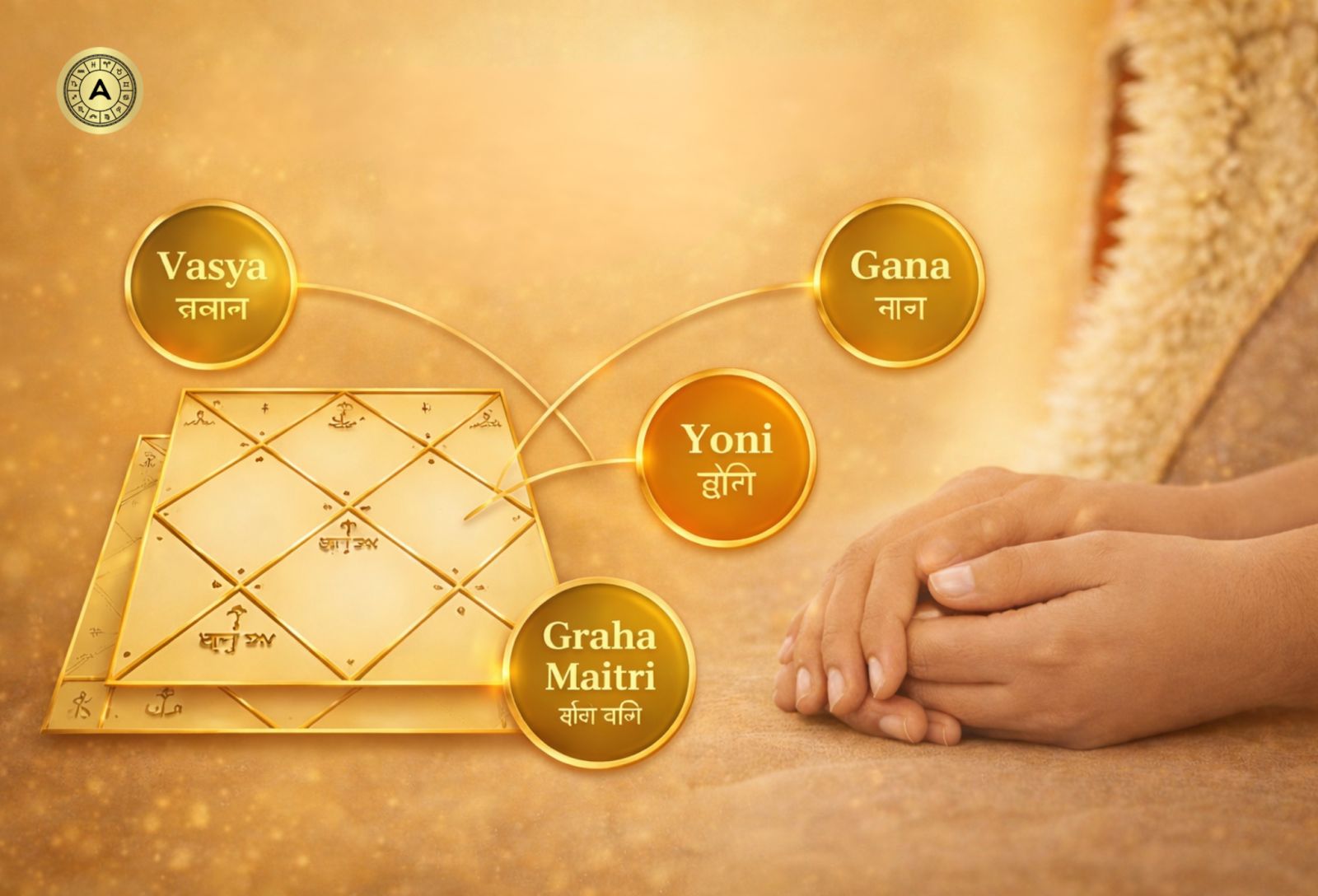
There isn't one uniform way to match stars. As different states have different cuisines, so do different states have different astrological practices. Understanding what nakshatra matching becomes clearer when you see how these regional systems work together to assess marital harmony. In northern India astrologers tend to use the Ashta-koota or eight-fold scoring system, with eight factors summing up to a total score of 36. These are Varna (temperament), Vashya (mutual control), Tara or Dina (health and longevity), Yoni (sexual compatibility), Graha Maitri (friendship between ruling planets), Gana (nature), Rasi (zodiac sign compatibility) and Nadi (physiological compatibility). The acceptable score would be 18 and an ideal score is 28 or more. Imagine it is similar to looking at various parts of a house before purchasing it: you examine the structure, plumbing, electricity and neighborhood. All the categories are the variations of married life.
The Porutham system is popular in Tamil Nadu and some parts of South India. It evaluates compatibility in ten divisions, such as Dina, Gana, Mahendra, Stree-Deergha, Yoni, Rasi, Rajju, Vashyaa, Varna and Nadi. Some of these coincide with the northern system, though special tests such as Rajju, which measures the life span of the husband and Mahendra, which measures progeny, are taken. Some of the astrologers in Kerala concentrate on Nakshatra Porutham, which is a calculation of the nakshatras of the boy and girl against each other in order to determine affection and wealth. Nevertheless, these differences do not change the basic concept, which is the knowledge of how two forces of life merge.
Point‑Based vs. Qualitative Assessment
One unknown truth about nakshatra matching is that not all compatibility tests rely on points. Traditional astrologers distinguish between kutas that contribute to the 36‑point scale and those that don't. For example, Nadi, Rasi, Gana, Graha Maitri, Yoni, Dina, Vasya and Varna yield a numerical score, while factors like Mahendra, Stree‑Deergha and Rajju are assessed qualitatively. Ignoring these non‑numerical indicators would be like judging a painting solely on size and colors without appreciating the subject and emotion. A holistic evaluation must consider both numbers and the broader symbolism.
Five Non‑Negotiable Kutas
Experienced astrologers emphasize that while matching stars in Hindu marriages, there are certain kutas that should never be compromised. These include Vasya (mutual receptivity), Mahendra (well‑being and prosperity), Yoni (intimacy), Janma Rasi and its lord (overall destiny). Even if a couple scores high overall, mismatches in these areas could indicate basic incompatibilities like lack of respect, financial instability or health issues.
Exploring Key Kutas in Depth
Nadi Kuta—Balancing the Body's Humours
The channels of energy in the body are also known as Nadi and are linked to three humors or doshas: Vatha (wind), Pitha (bile) and Sleshma (phlegm). Classical literature compares such humors to the natural constitution of the body. When partners of the same Nadi come together, it is believed that they can have health problems or they may not conceive at all. This is the reason why the bride and the groom must belong to different Nadis; once they have different columns, it is believed that there is a good match. It is comparable to putting two spices, which are too powerful, in the same dish: at times the mixture can really be good, but when there is too much of them, they could overpower the taste.
Rasi Kuta – Zodiac Sign Harmony
Rasi matching considers the sign (rasi) of each partner of the couple. This aspect highlights the importance of star matching because it reflects how emotional balance and material stability may unfold after marriage. According to traditional rules, the groom is not supposed to be in the 2nd, 3rd, 4th, 5th or 6th sign to the bride's rasi because this would make him lose money, sorrow, quarrel, have no child or get sick. There are exceptions, however, as pointed out by astrologers: when the lords of the two rasis are friendly or mutually favorably positioned, the marriage will be successful. It is like a weather prediction; a rainy day may destroy a picnic, but it does not have to do so unless you do not prepare and place it into a context (such as a canopy).
Gana Kuta – Matching Natures
Nakshatras can be classified as three temperaments (gana): Deva (divine), Manushya (human) and Rakshasa (diabolical). Deva people are tender and religious, Manushya are balanced and Rakshasa are fierce and powerful. Preferably, a Deva must not be married to a Rakshasa, as they do not go well together. However, there are some compensating factors: when there are other compatibilities with the partners, such unions may be successful. The point to learn here is that one should learn a lot about their types of personalities; a quiet-spoken artist may struggle to coexist with a violent leader unless the two learn to recognize the strengths of the other.
Graha Maitri – Planetary Friendship
Graha Maitri looks at how the friendship of the ruling planets of the couple is during guna milan in Indian marriages. When the planets are friends, the association is said to be harmonious and when enemies it might demand additional force. It is not as different in sports teams: team chemistry is important. Even the skilled players may not perform well when they do not admire the playing style of one another.
Why Star Matching Matters Beyond Tradition
One thing that is commonly asked by modern couples is, "Does star matching really matter? We are in love and that is enough, right?" It is just a question of considering that personal choice and mutual attraction take center stage. Star matching is not designed to substitute personal compatibility but to point out areas that could be of concern. A potential friction in a couple is reflected in its charts, thus leading to the discussion of expectations, values and family dynamics. As a case in point, when the Nadi points are low, the couple would be interested in health checkups and openness regarding stress. In case there is a difference in the emotional expression as shown in the Rasi, they can understand the love language of each other. Instead of making some strange decision, nakshatra matching is a relationship counsellor, indicating strong and weak aspects that couples can improve on.
Understanding nakshatra matching in marriages can help in predicting a long marriage life, procreation, wealth and compliments. The higher the compatibility of the partners, the more intimacy, trust and ability to overcome hardships the partners have. On the contrary, in case the stars are not balanced, then the astrologers are able to suggest remedies for this and such may involve some mantras, rites, charity or fasting to balance the energies. In this manner, the matching of nakshatra is rather a problem-solving tool.
Making Star Matching Clear and Personal
Matching the stars is not just about numbers and charts; it is about clarity and confidence during a moment in life when things are being changed. When you are searching about star matching in Hindu marriage and seek advice that is precise and not biased, modern astrology technology can simplify and clarify the issue. Having more technologically advanced systems that are based on the true Vedic concepts, Astro247 can be used to decode the compatibility between nakshatras in clear and understandable ways, without misunderstandings or fear-inspired interpretations. You want to gain a better understanding or get a feeling of security; the right advice can make you look forward to marriage with consciousness, balance and confidence in the future.
Conclusion
Star matching in Hindu marriages is not some mystical law engraved in stone; it is a proven technique of studying how two lives can be united. Knowing the 27 nakshatras, learning about the various kutakas and admiring both point-based and qualitative evaluation, couples can have a deeper understanding of how they relate to each other. The exercise illuminates health, emotional prosperity, intimacy and timing, which provide partners with the opportunity to solve possible obstacles before they arise as problems. However, there is no chart that is flawless and all marriages need work, communication and mutual respect. Accepting nakshatra according to importance is to understand the worth of using it as a tool of direction but to keep in mind that love, understanding and compassion are the real pillars of a lasting relationship.
Frequently Asked Questions
About the Author
Jyotish Rahul
10+ years ExperienceJyotish Rahul has been a Vedic astrologer for more than 10 years. He is known for his calm guidance and specializes in kundali analysis and planetary influences, helping people make confident life decisions. With a warm counselling style, he helps clients understand their charts and navigate life's important decisions.