
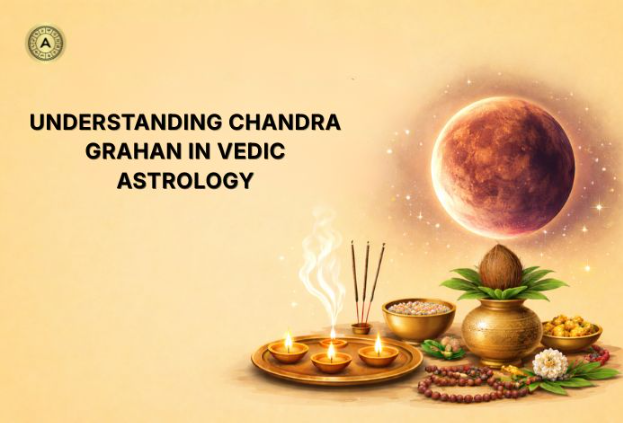
When Chandra Grahan (lunar eclipse) takes place, the Moon gradually changes its color and turns red; we all pause and look in the direction of the sky in wonder. And with the excitement, some questions come to mind: Should we eat? Should we pray? Or should we do anything special in this time? The Chandra Grahan in Vedic astrology is not just a shadow cast on the Moon. It is considered a sensitive period, when one can experience emotions more intensively and spiritual practices gain more sense. This is the reason why a large number of families follow a few do’s and don’ts in order to remain calm and harmonic during the eclipse.
Understanding Chandra Grahan
A Chandra Grahan occurs when the Earth stands in between the Sun and the Moon and the shadow is cast over the Moon. The eclipse may be penumbral, partial or total according to th e extent of the area covered by the Moon. For example, in 2025 a total lunar eclipse lasted around 82 minutes during Pitru Paksha Purnima.
Old stories tell of a demon named Swarbhanu who tried to drink nectar of immortality and was cut in two; his head and tail became Rahu and Ketu. These two are not physical planets. They are astrological shadow planets. They represent the crossings of the paths of the Sun and Moon. An eclipse occurs when the Moon is near Rahu or Ketu in the sky. It is the reason why it is said that Rahu swallows the Moon during Chandra Grahan.
According to Vedic belief, Moon controls feelings, mind, memories and peace of mind. Its energy is said to get weak or anxious during an eclipse. This is the reason why the astrologers suggest so many Chandra Grahan do’s and don'ts, like remaining calm, not being active, to concentrate on prayers or mantra chants during this period.
Why is Chandra Grahan Important in Vedic Astrology?
According to Chandra Grahan in Vedic astrology, people have the ability to be affected by the eclipse depending on their zodiac sign and birth star (nakshatra). The 2026 lunar eclipse is an example that is going to occur in Aquarius (Kumbha) in nakshatra Purva Phalguni. Individuals born with Bharani, Magha, Purva Phalguni or Uttara Phalguni stars, as well as those born with Capricorn, Cancer, Leo or Taurus, should be more careful. These warnings are meant to encourage self‑awareness and not fear.
However, science informs us that a lunar eclipse is a harmless celestial event. The red color is due to the atmosphere of the earth, in which the red light is bent towards the Moon. Although there is no physical threat, most of them prefer to stick to the traditions through meditation, chanting and fasting to spend the time on personal development.
Common Beliefs and Rituals: Do’s During Chandra Grahan
1. Prepare the Body and Mind
Fast or eat light: Lots of families do not have heavy meals during the eclipse. Some people practice total fasting, while others engage in a modest vegetarian breakfast two or three hours before it starts. According to Ayurveda, cooked food can spoil easily in the absence of sunlight; hence, turmeric or tulsi leaves are added to food to preserve it.
Take a ritual bath: A bath before the eclipse is believed to cleanse the body. It is believed that bathing after the sun goes down replaces any form of negativity. It is commonly advised for the pregnant woman to take a bath in cool water post-grahan.
2. Spiritual Activities
Chant mantras and meditate: People chant the Maha Mrityunjaya Mantra or Chandra Beej Mantra (Om Shram Shreem Shraum Sah Chandraya Namah) in order to find some peace and safety. There is an opinion that the mantras are more effective when recited during the period of a grahan.
Read and sing devotional songs: Reading books such as Ramcharitmanas, Bhagavad Gita, Hanuman Chalisa or singing bhajans is useful in maintaining the harmony of the mind during the Chandra Grahan.
Set intentions: Because the mind is said to be more sensitive at this time, people take the opportunity to pray, write in a journal or think about personal goals.
3. Protect Food and the Home
Cover stored food: Tulsi leaves or kusa (darbha) grass are put on containers of food and water in a manner that the eclipse does not have any impact on them. Darbha grass is also a natural preservative.
Sprinkle holy water: Once the eclipse is over, individuals sprinkle Gangajal or just plain water around the house and on idols, which means that they are clean.
Coconut ritual for mothers‑to‑be: Pregnant women hold a coconut filled with water on their laps during the eclipse and place it in running water. This is an age-old ritual to protect the baby.
4. Charity and Service
Donate white items: After the grahan, items connected to the Moon, milk, rice, sugar, white clothes or silver are donated to enhance the lunar energy.
Offer tarpana (water) to ancestors: During Pitru Paksha, people offer water and prayers to their ancestors. This is believed to bring blessings.
Chandra Grahan Precautions You Must Follow
Avoid starting new ventures: Weddings, new business deals and all other significant beginnings are generally delayed since the period is considered to be unstable.
Don’t cook or eat during the eclipse: It is believed by many to avoid cooking and eating during the grahan and eating the prepared food later. The people who are required to eat (pregnant women or elderly people) could have boiled water or dry fruits like raisins.
Avoid intimacy and sleep: It is said that sleeping or having intimate relations during the Chandra Grahan can disturb the body’s subtle energies.
Do not cut hair or nails or use sharp tools: It is believed that cutting hair or nails or using a pair of scissors and knives is not a good idea since it will cut off good energy.
Don’t touch idols or sacred plants: In the eclipse people do not touch idols as well as holy plants such as Tulsi, Peepal and Banyan.
Stay indoors and avoid heavy work: Most people find it better to keep at home and not to travel far or do hard work so as to maintain the atmosphere of peace.
Stay calm and don’t fear: According to science, there is nothing harmful in a lunar eclipse. The prohibitions are in cultural practice and mindfulness.
Special Precautions for Pregnant Women
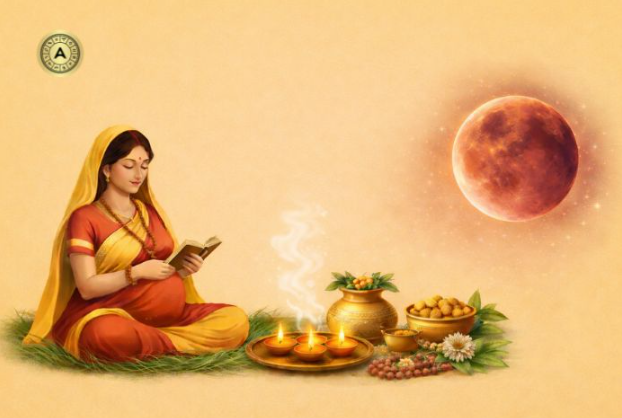
The women who are pregnant are given special precautions for Chandra Grahan. They are supposed to remain at home, not look at the Moon or use knives or needles, which is traditional. It is believed that sitting on a Durva grass bed and chanting the Santana Gopala Mantra is helpful to the baby. After the grahan, they are advised to bathe or sprinkle holy water and avoid leftover food.
According to modern medicine, a lunar eclipse has no negative effect on pregnancy. Such practices are taken to gain some cultural comfort. The unborn mothers are supposed to pay attention to rest, good meals and hydration.
Rituals After the Eclipse
When the Sutak (eclipse period) ends, people often follow a few simple steps:
Take another bath: Bathing again is believed to remove any remaining negativity.
Purify the house: Sprinkling Gangajal or plain water is a way to cleanse the home.
Resume worship and light lamps: Normal prayers and lighting of diyas resume after the eclipse.
Cook fresh food: Any food made before the grahan is thrown away and new food is prepared.
Donate and feed others: Giving milk, rice, curd or white clothing to the needy is encouraged.
Conclusion
Chandra Grahan is a time that is said to be important and powerful in Vedic astrology. It is not handled like any ordinary night. According to Vedic astrology, the Moon’s energy becomes sensitive during this period, which can affect emotions and thoughts. This is why individuals follow some precautions for Chandra Grahan, such as fasting, reciting mantras, not starting new things and giving charity.
It is not out of fear but awareness. It is a period of introspection, prayer and spiritual cleansing. Chandra Grahan may actually become a spiritual experience when done with a clear mind and with good intent.
Frequently Asked Questions
About the Author
Jyotish Rahul
10 ExperienceJyotish Rahul has been a Vedic astrologer for more than 10 years. He is known for his calm guidance and specializes in kundali analysis and planetary influences, helping people make confident life decisions. With a warm counselling style, he helps clients understand their charts and navigate life's important decisions.